Jump to content

Apptio IT Service Costing

Apptio’s IT Service Costing application enables IT to get deep visibility into the fully loaded cost of their client services, infrastructure services, applications and the total IT services portfolio to quantify the financial impact (ROI) of business decisions targeted at lowering costs or adding new capabilities. Robust activity based costing is designed to arrive at highly precise total costs. The application also supports calculation of unit rates and provides integrated reporting to allow users to easily track and trend costs over time.

This allows customers to answer key questions like:

  • Client Services: What is the TCO of a laptop vs. a desktop? Which hardware brands are most cost effective? What is the TCO of extending upgrade cycles weighing support and maintenance vs. capital spend?
  • Shared Services: Which OS/hardware combinations have the lowest TCO in the data center? What is the financial impact of moving Tier 1 support to a low cost geography? What is the TCO of Tier 1 vs. Tier 2 vs. Tier 3 storage? What cost saving can be obtained by moving archived storage to Amazon?
  • Business Services: Which applications are the most expensive over time? Which applications have application support as the top cost driver? Do we have the right service level cost investment per application? What are the cost savings of moving email to the cloud?
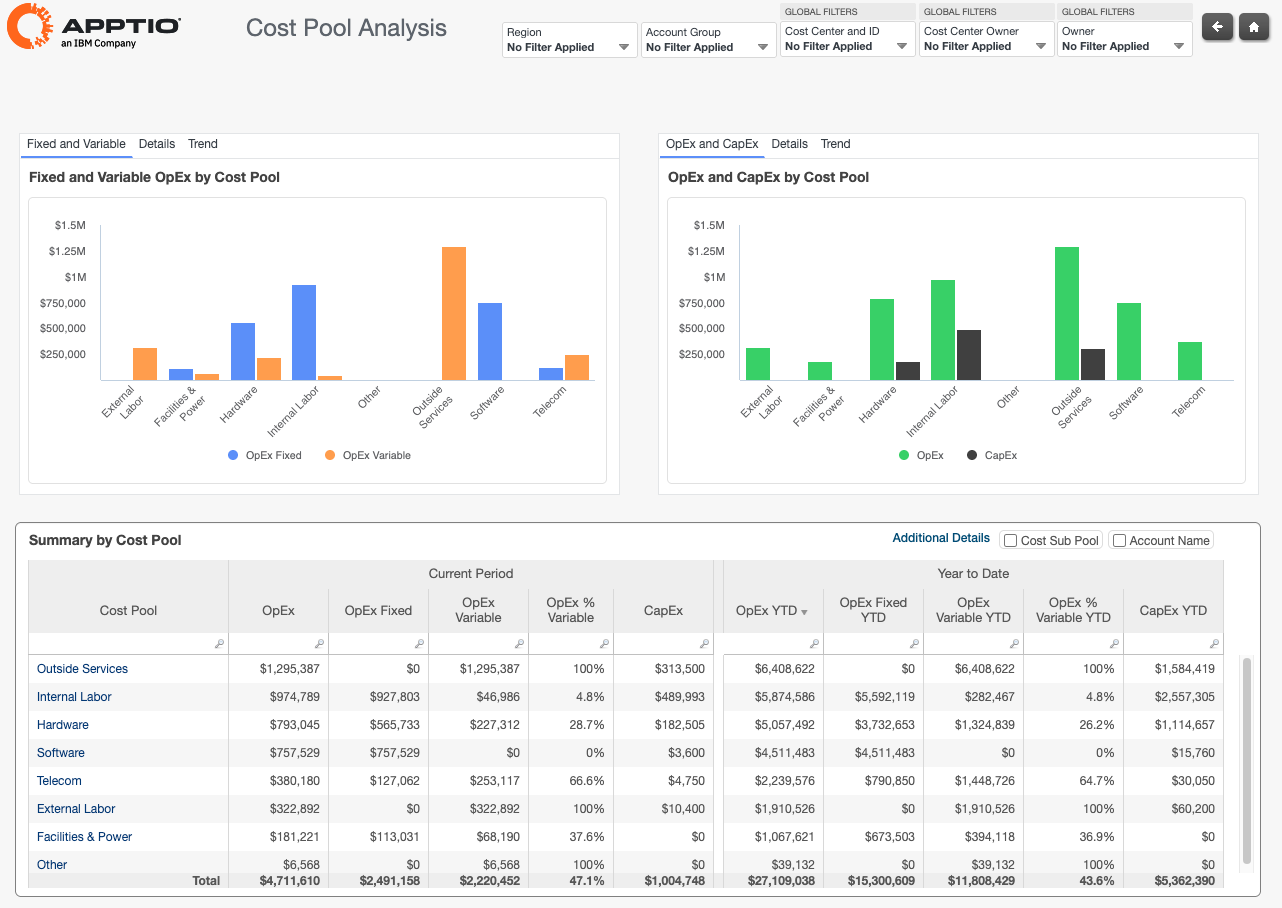
  • Portfolio: What is the total capex to opex ratio? What is the fixed to variable ratio of IT spend? What is my proportion of investment in Run the Business (RtB) vs. Change the Business (CtB)?

Capabilities

  • Builds an intuitive, visual model of IT services and their cost drivers
  • Uses activity-based cost allocation (ABC) to calculate precise application and services TCO and unit costs
  • Combines granular cost and system information with assumptive data or rate cards sourced from a PPM system
  • Patent pending data inference technology detects data relationships for precise activity based costing
  • Powerful "What If" analysis to quantify the impact of potential changes to IT cost
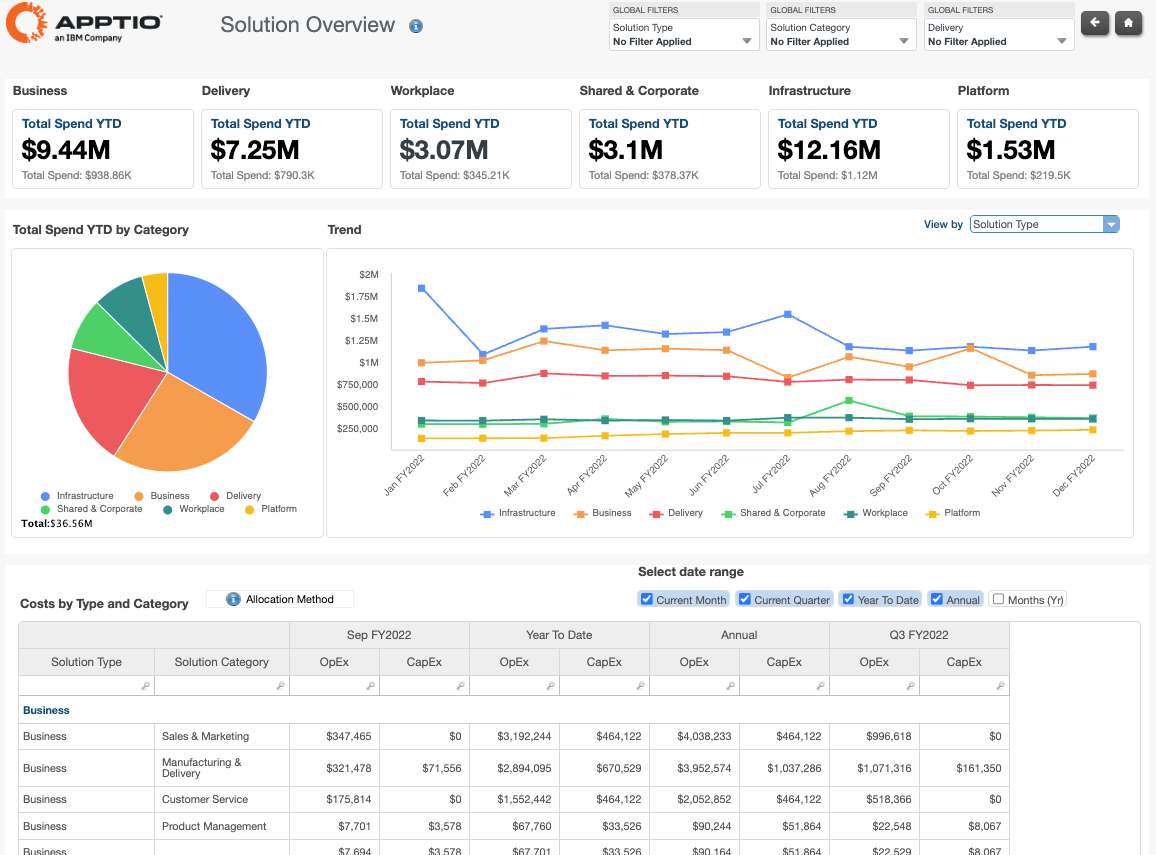
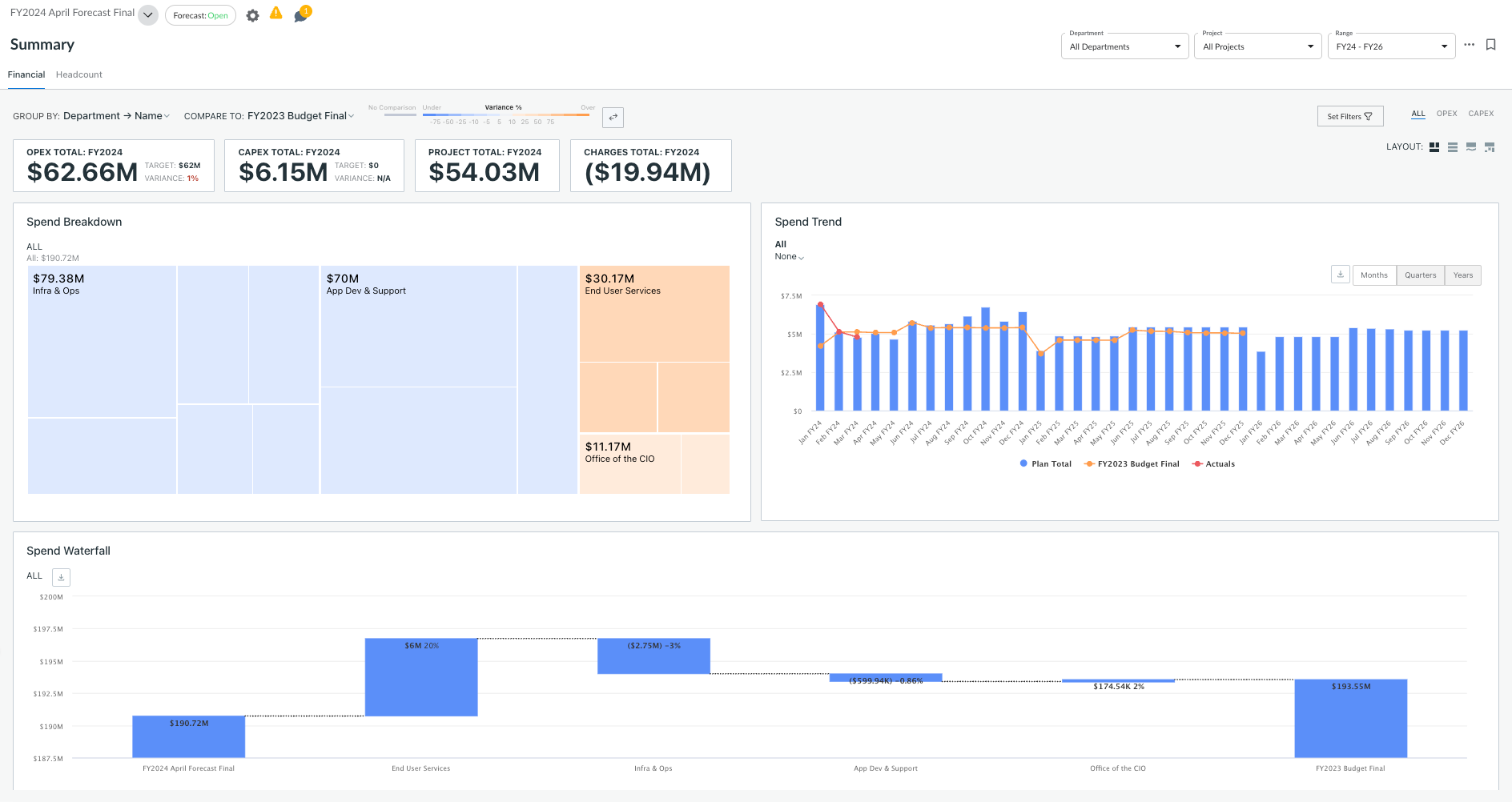
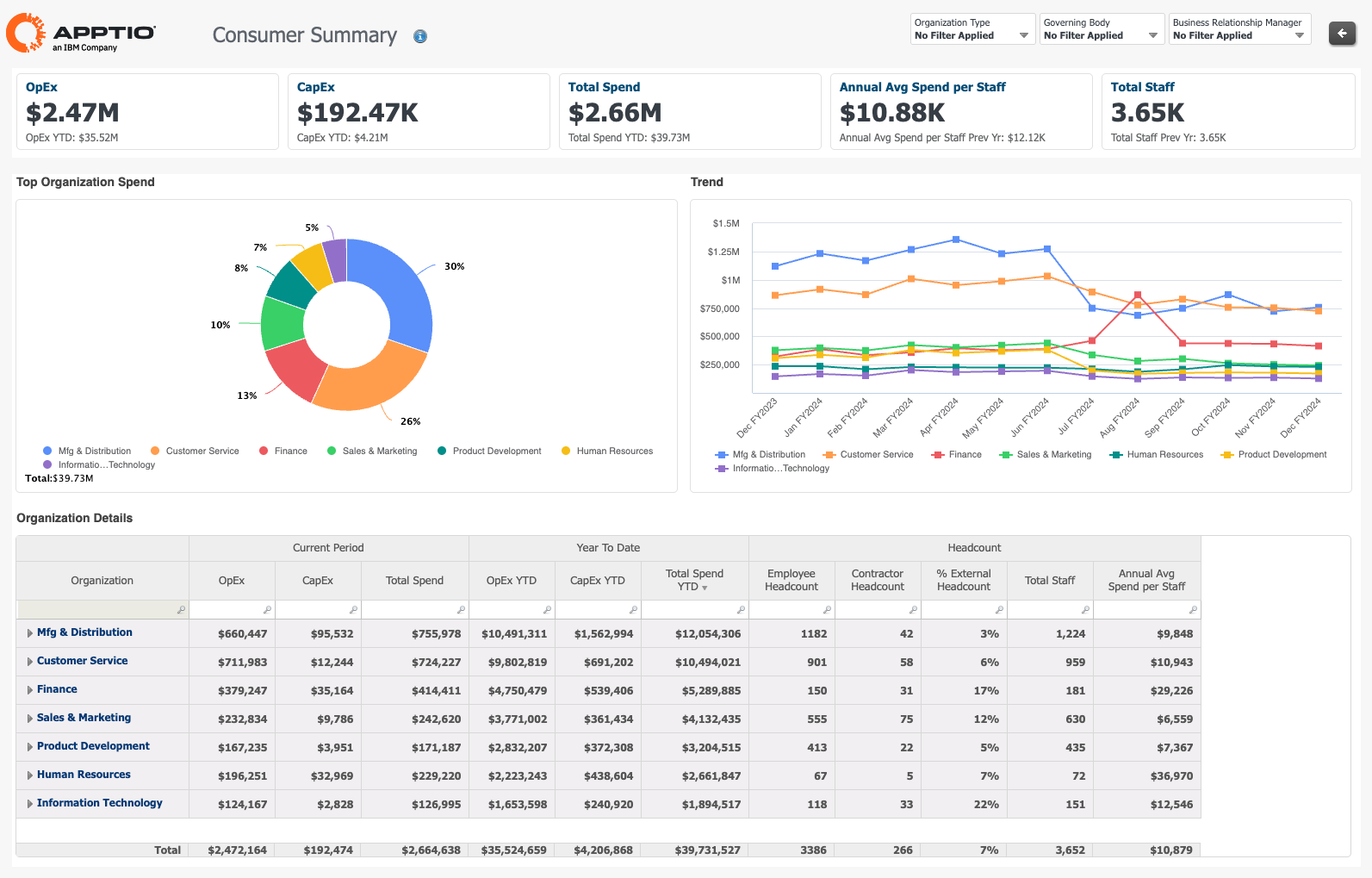
  • Rich, interactive reporting to analyze IT service costs and underlying activity drivers to create concise cost and performance dashboards
  • Out of the box transparency accelerators which represent best practices for costing IT services

The Need for Cost Transparency in IT

Service Costing screenshot

As IT organizations continue on the road to becoming world class service providers, they increasingly need visibility into the fully burdened cost of delivering IT services in the same way manufacturing organizations must understand their cost of goods sold.

Transparency into the TCO of the IT service portfolio is a key enabler to many IT initiatives including application rationalization, platform standardization, data center/facilities management, service level optimization across the portfolio and outsourcing. It is also fundamental to evaluating the ROI of using third party or cloud services within the IT supply chain including Google Mail, EC2, AWS and IaaS.

Model IT Services and Cost Drivers

IT Service Costing begins with creating a visual cost model of the IT service and its core cost drivers. For example, to calculate the total costs to operate a server, it's necessary to understand the datacenter costs (real estate, power cooling and hosting costs), hardware and software (including depreciation and maintenance) and support as its key cost drivers.

Activity Based Cost Allocation

Apptio’s activity-based costing enables IT to assign cost precisely so the results are quickly meaningful and actionable to drive decisions. For example, application support is frequently assigned to applications as an even spread. With Apptio, these costs can be allocated by the number of tickets worked on a given application or the number of man hours spent on application support. Virtual server costs can be allocated by CPU utilization per app or memory assign to a VM or assigned CPU. As each aspect of the application cost model becomes more precise, the inherent actionability of the results rises exponentially.

Combine Actual with Assumptive Data

Once a model has been designed, the next step is to import key financial and IT operational data. The data can combine actual data sources from the GL or systems management systems with assumptive data or rate cards like labor pools.

"What If"

Apptio IT Service Costing provides powerful “What If” analysis to identify cost reduction opportunities, quantify the impact of new investment decisions and make better decisions that can improve the overall effectiveness of IT. For example, an IT decision maker can pose the question: "How do my costs change if we add 500 servers next year? What happens to my total cost if I consolidate low utilization, high cost servers using virtual machines?" These scenarios can be combined with modeling of actual costs and performance metrics that are core to the Apptio solution so that users can measure the actual impact of IT decisions over time.

Integrated Reporting, Analytics and Dashboarding

Apptio offers a rich reporting, analytics and dashboarding experience out of the box.  Historical reporting, ad hoc queries and executive dashboarding are provided as part of the core platform and require no additional investment in or integration with third party BI, query or dashboarding solutions for a dramatically lower TCO.

Improve Time-to-Value with Transparency Accelerators

In addition to an easy to use visual modeler, Apptio IT Service Costing provides best practices transparency accelerators for core IT domains such as servers or storage. These accelerators capture the data sources, modeling, reporting and analytical best practices associated with a specific IT domain. For example, a template that covers servers or storage includes best practices on what cost elements to include in the model, key data required, recommendations on allocation methods, and key reports and analytical views.

Related Product Application:

IT Modeling and Activity Based Costing Module

Apptio's cost modeling and activity based costing capability enables deep analysis of the cost drivers of IT without sacrificing easy-to-develop models and allocation metrics.