
![ApptioCareers-Employee[1]](data:image/svg+xml;base64,PHN2ZyB4bWxucz0iaHR0cDovL3d3dy53My5vcmcvMjAwMC9zdmciIHZpZXdCb3g9IjAgMCAyMjUgMjc1IiB3aWR0aD0iMjI1IiBoZWlnaHQ9IjI3NSIgZGF0YS11PSJodHRwcyUzQSUyRiUyRnd3dy5hcHB0aW8uY29tJTJGd3AtY29udGVudCUyRnVwbG9hZHMlMkZlbGVtZW50b3IlMkZ0aHVtYnMlMkZBcHB0aW9DYXJlZXJzLUVtcGxveWVlMS1xZzVuenB5MHdoaWJtbzZvdmJqNGM3MHh0aTUzdmo1OHM0endwajh0dHMucG5nIiBkYXRhLXc9IjIyNSIgZGF0YS1oPSIyNzUiIGRhdGEtYmlwPSIiPjwvc3ZnPg== "ApptioCareers-Employee[1]")
Every organization is trying to manage rapidly growing investments in models, tokens, GPUs, data, infrastructure, and AI services. With skyrocketing costs, expensive sprawl, and increased scrutiny, technology leaders are facing a critical question: What value are we getting from every dollar spent on AI?
Fortunately, FinOps teams are well-positioned to answer this trillion-dollar question. Enter AI unit economics, which articulates the value delivered from AI costs and helps FinOps teams understand, quantify, and optimize those costs for long-term financial sustainability.
The Role of AI Unit Economics in FinOps
The role of FinOps practitioners is more important than ever in the age of AI transformation. Organizations that haven’t already started tracking AI costs and connected consumption to products, customers, and business processes are behind the curve. For example, a customer service agent will likely have a higher operating cost than a coding agent, since the former needs to make regular API calls to access customer files, run a voice protocol, and perform multi-step actions.
AI unit economics starts with understanding how token usage, model calls, infrastructure, data services, and engineering resources contribute to outcomes such as revenue growth, customer retention, faster service delivery, improved employee productivity, or reduced operating costs. These cost considerations must be holistic (fully burdened) and accurately reflect allocation structures that mirror business operations.
When AI consumption is mapped to outcomes this way, FinOps leaders can compare use cases, calculate unit economics, and determine which investments are worth scaling.
The Challenge: Understanding the True Cost of AI
AI unit economics is only as accurate as the cost data underneath it. But like almost any AI-related project, data sourcing and management is one of the hardest parts. New cost models with frequent changes, non-standard tokenized utilization metrics, as well as a large and varied set of LLMs and agentic applications, are adding to the sea of data that must be reported regularly.
Though the principles of cost and utilization metrics remain the same, new reporting sources with varying models and levels of costing and utilization data make standardizing allocation and reporting harder than ever. This doesn’t account for the technologies supporting AI workloads and where they fit within existing workstreams. What an “AI-related metric” is, for instance, must be defined beyond token consumption, agentic applications, and LLM costs.
These factors compound the challenge of articulating the fully-burdened costs and utilization of AI workloads, which is the foundation for every unit economics calculation.
Cross-Functional Collaboration that Supports FinOps for AI
Beyond the technical reporting challenges, organizations are spawning entirely new departments, cross-functional partnerships, and new roles to meet the demands of AI. FinOps teams are now communicating with Cloud Centers of Excellence (COEs) and AICOEs, Cloud Engineering leads and AI Engineering leads-people who often wear multiple hats with overlapping roles across the organization.
To communicate the value of AI investments and manage these new collaborative workstreams, FinOps practitioners need a shared set of metrics that define AI unit economics for finance, engineering, product, and business teams:
- Cost per AI interaction
- Cost per automated task
- Revenue per AI-enabled capability
- Rate reduction or savings per workflow
These metrics provide a common language for evaluating the performance of AI initiatives.
Translating this information into value requires a robust collaboration framework across teams. A successful FinOps practice must go far beyond data analytics and cost optimization. The unprecedented pace of growth compounds, not just the data challenges, but the collaboration challenges of organizational FinOps practices.
Roles Don’t Change, But Pace and Scale Have Magnified Their Impact
By working from a consistent unit economics framework, teams can jointly balance cost, quality, speed, risk, and business impact:
- Finance understands budgets and financial impact
- Engineering leads workload performance and technical tradeoffs
- Product leaders oversee the outcomes required to meet customer needs
FinOps practitioners must lead collaboration, not just report numbers. Data alone doesn’t explain the what or the why.
This shared approach creates accountability, reduces conflicting priorities, and helps leaders fund high-value initiatives, improve inefficient workloads, and make smarter decisions about where and how to scale AI.
Managing Up with AI Unit Economics
When communicating with business leaders, FinOps practitioners must have both the data and an understanding of AI investments, along with the metrics behind them. The strongest FinOps practitioners explain the business drivers behind investments and help articulate the impact of technology.
FinOps leaders need to show how technology operations ties back to the business and increased efficiency in running AI and everything around it. AI unit economics makes that possible.
The Right Tools for the Job
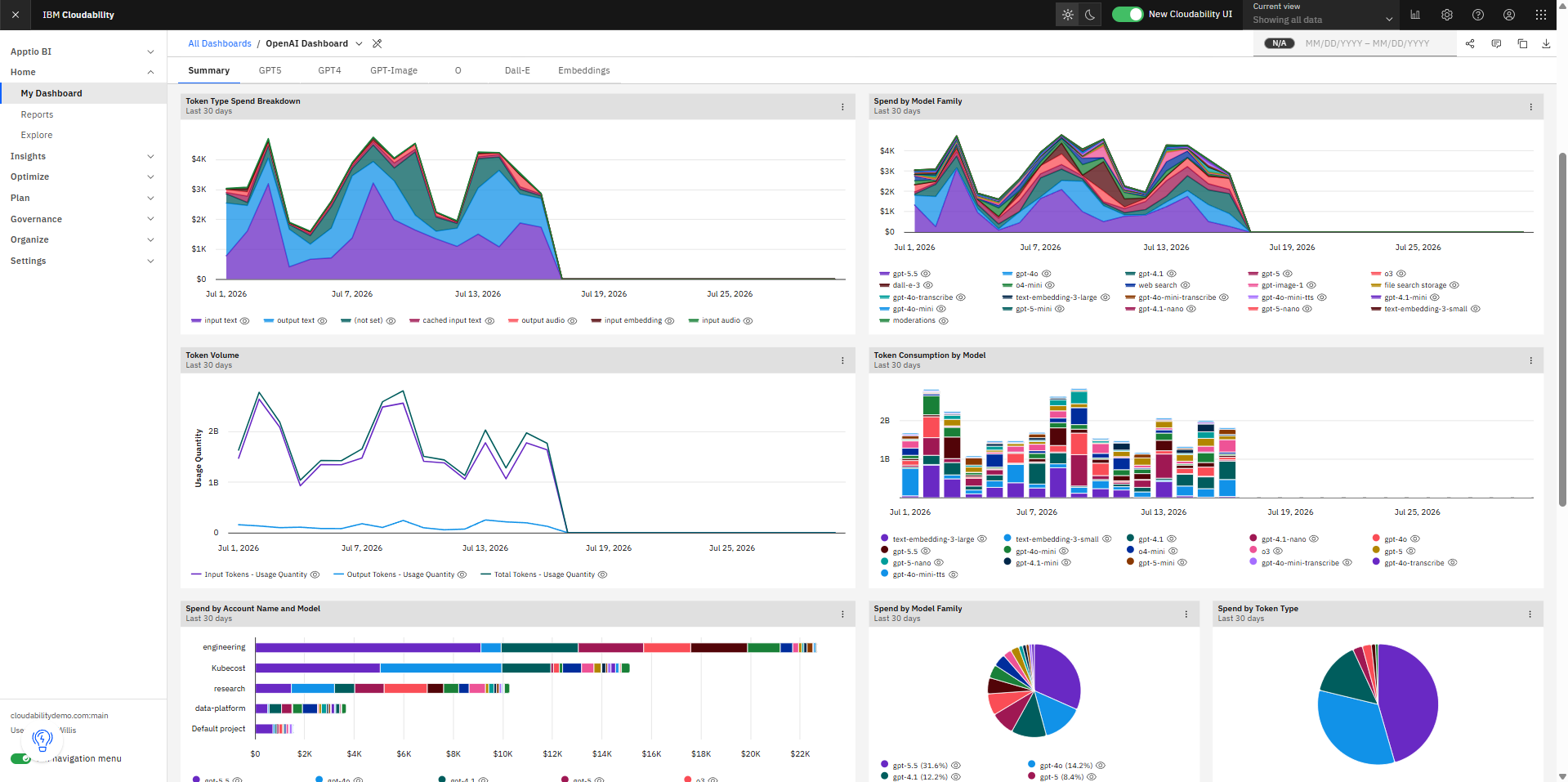
With IBM Cloudability, organizations have the FinOps capabilities need to pragmatically scale AI, establish where value is being delivered, and build ongoing collaborative process structures. The solution enables optimization practices and cost reporting that go beyond the “what” and equip FinOps practitioners to deliver the “why” and “how” of AI to business leaders.
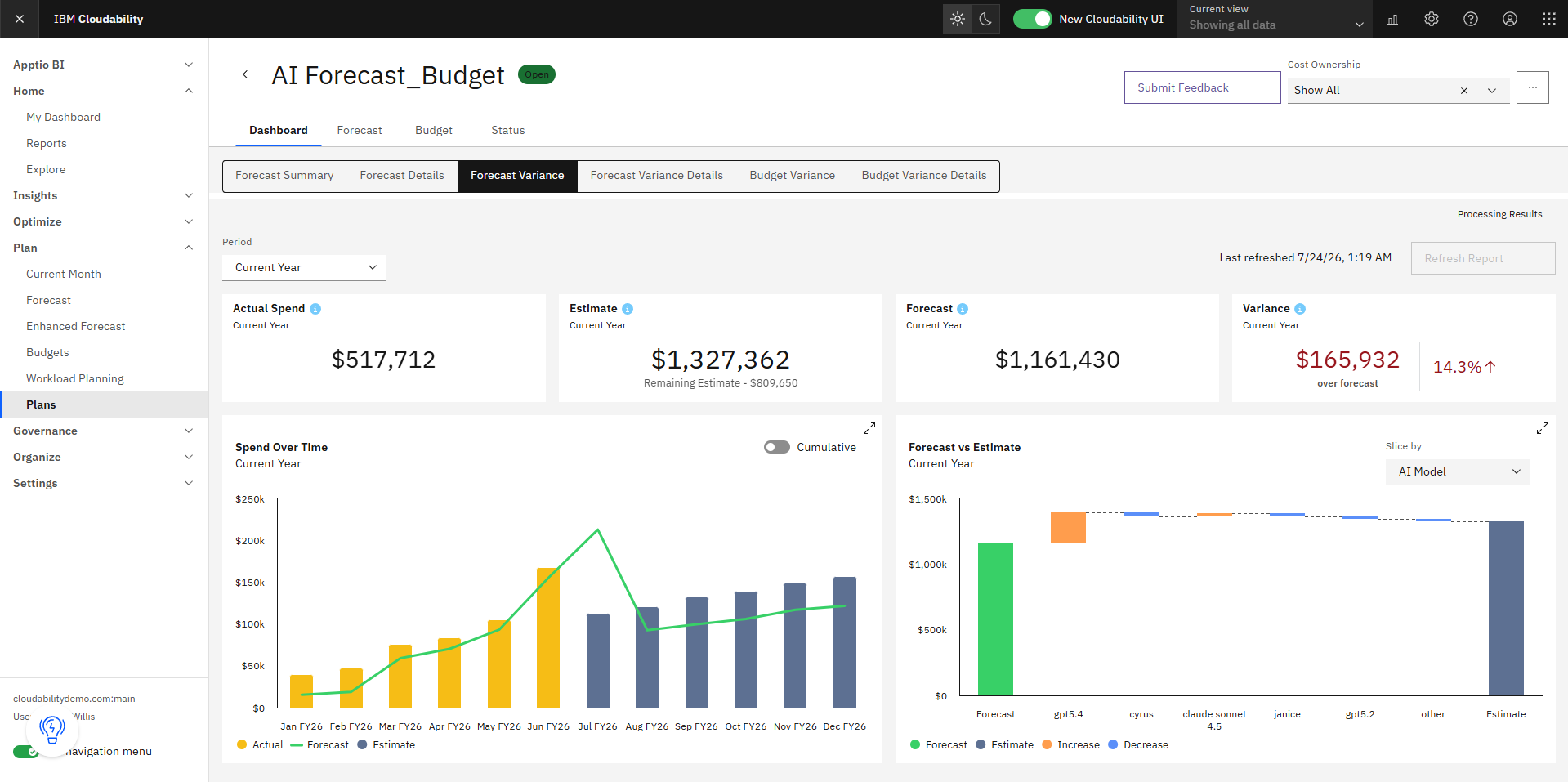
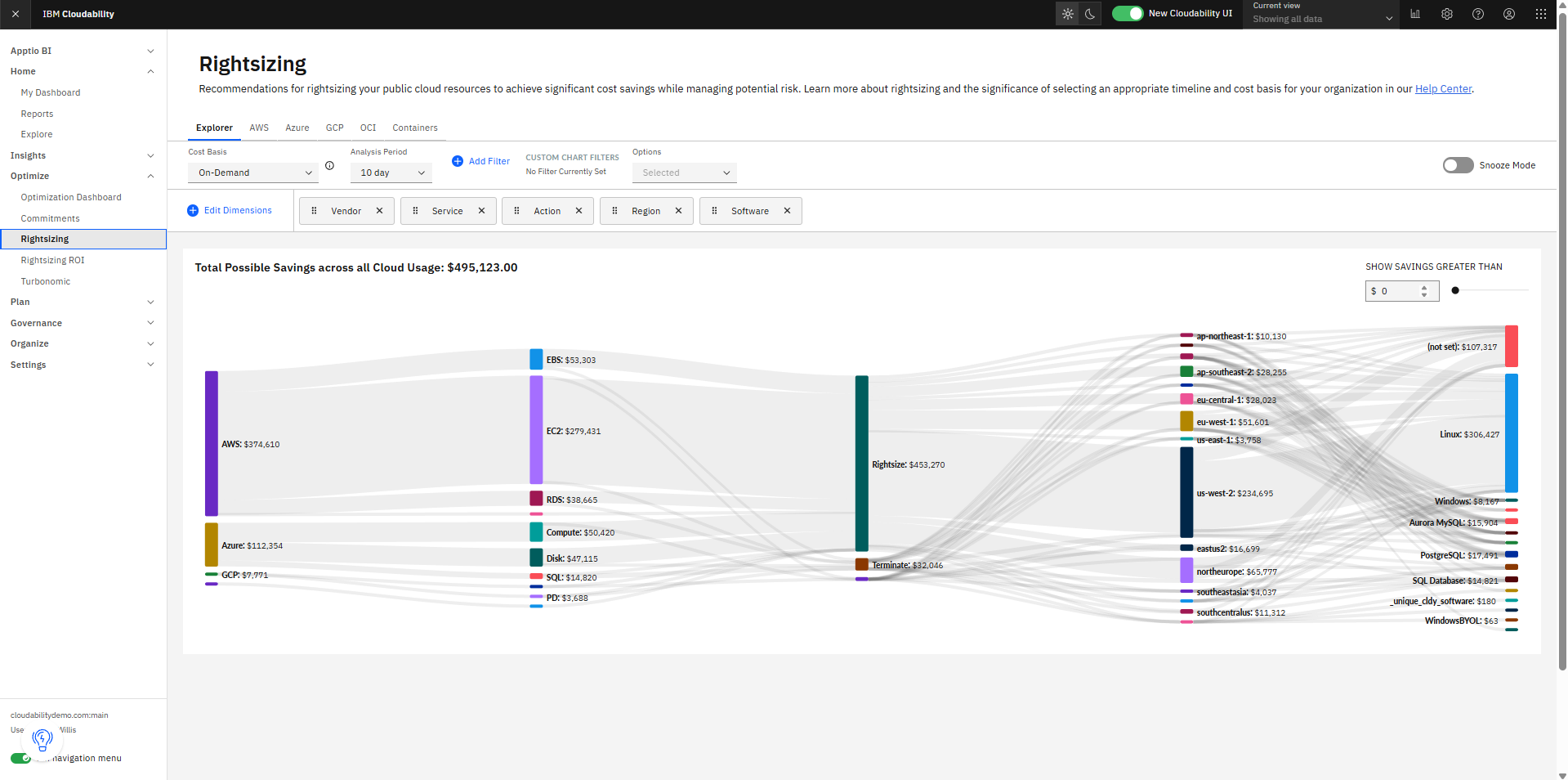
All of this comes in addition to industry-leading commitment support for AI and cloud costs, plus optimization recommendations and automation for GPU-backed instances, Kubernetes, and more.
Start a free trial today
See how you can track and optimize cloud and AI spend now—start a free trial today.


