
![ApptioCareers-Employee[1]](data:image/svg+xml;base64,PHN2ZyB4bWxucz0iaHR0cDovL3d3dy53My5vcmcvMjAwMC9zdmciIHZpZXdCb3g9IjAgMCAyMjUgMjc1IiB3aWR0aD0iMjI1IiBoZWlnaHQ9IjI3NSIgZGF0YS11PSJodHRwcyUzQSUyRiUyRnd3dy5hcHB0aW8uY29tJTJGd3AtY29udGVudCUyRnVwbG9hZHMlMkZlbGVtZW50b3IlMkZ0aHVtYnMlMkZBcHB0aW9DYXJlZXJzLUVtcGxveWVlMS1xZzVuenB5MHdoaWJtbzZvdmJqNGM3MHh0aTUzdmo1OHM0endwajh0dHMucG5nIiBkYXRhLXc9IjIyNSIgZGF0YS1oPSIyNzUiIGRhdGEtYmlwPSIiPjwvc3ZnPg== "ApptioCareers-Employee[1]")
Connect talent, spend, and strategic goals in a single view
Managing a modern workforce is harder than ever. Siloed data across HR, PMO, and finance creates inconsistent views, leaving leaders blind to resource availability and open headcount. Capacity planning often relies on guesswork without visibility into demand and utilization, and disconnected labor cost tracking makes proving ROI a challenge. Workforce Management eliminates these blind spots with a single view of resources and costs. It helps you balance demand with capacity to prevent overload and enables agile scenario planning as priorities shift. Real-time cost control keeps labor spend on track—so you can deliver with confidence and stay aligned with strategy.
Typical customer outcomes with IBM Targetprocess
increase in realized spend on strategic priorities
faster product delivery cycles
improvement in cycle time and velocity among Jira teams

Learn how Workforce Management bridges ITFM and SPM, aligning workforce data, financial planning, and execution to drive business results.
Workforce Management helps organizations optimize capacity
Workforce Management helps organizations align every role to strategy while controlling costs. By connecting talent, spend, and strategic goals in a single view, it empowers EPMO and Strategy leaders to plan proactively and IT Finance leaders to optimize investments. This capability enables organizations to measure capacity, identify skill gaps, and align workforce planning with budget realities—ensuring the right people are doing the right work at the right cost. With clear visibility into workforce allocation, leaders can confidently balance execution needs with financial constraints, reduce inefficiencies, and deliver more value without overspending.
Connect people and work data
Link skills to priorities
Plan and forecast capacity
Optimize workforce investment
Know your workforce, optimize talent, and deliver efficiently
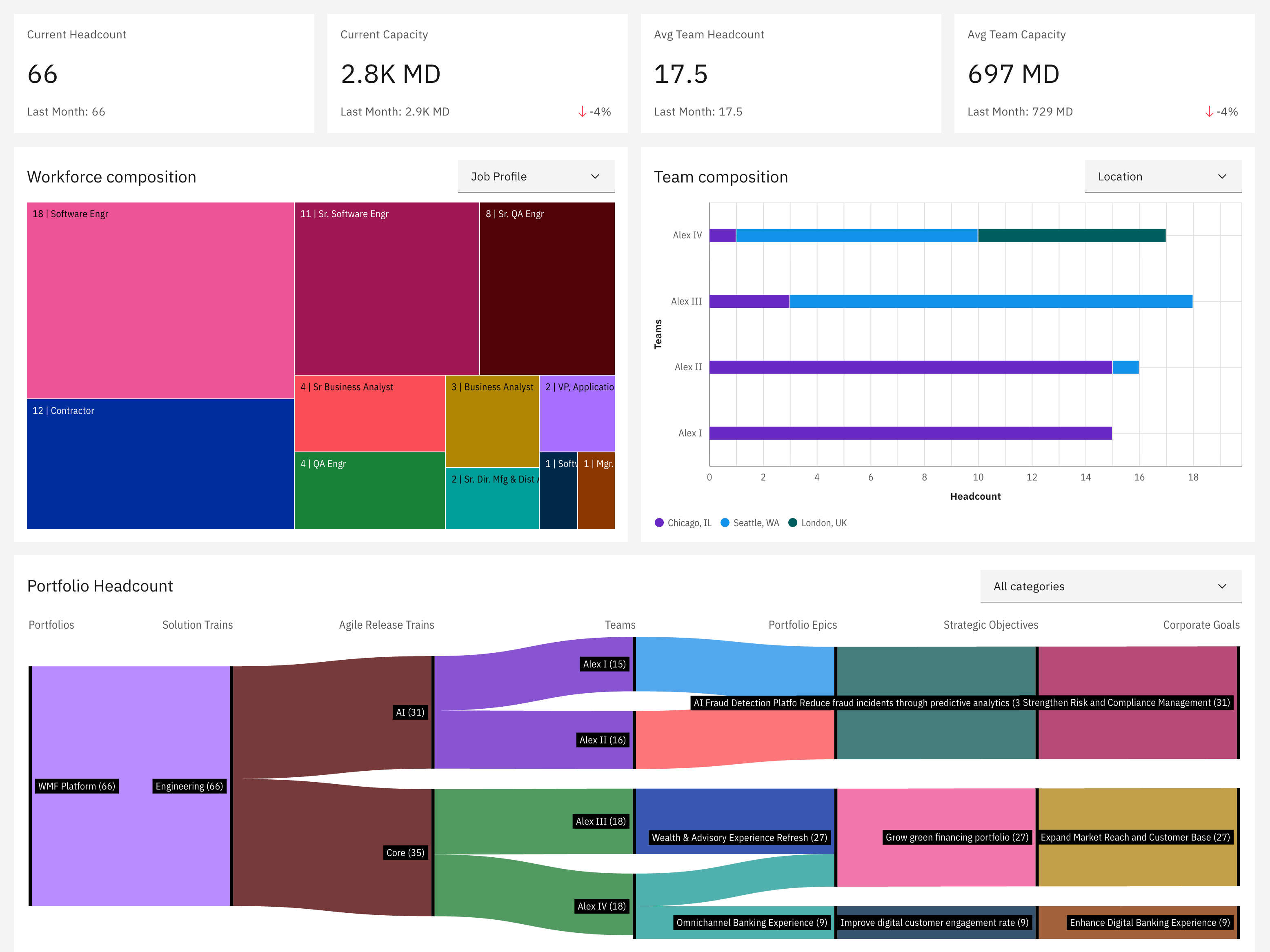
Workforce Management integrates role, cost, and capacity data from HR, finance, and delivery systems to provide real-time visibility into team allocation, costs, and alignment with business priorities. It helps leaders understand resource availability, plan capacity to balance workloads and forecast demand, connect labor costs to budgets and outcomes, and ensure workforce investments support strategic goals.
- Workforce visibility and alignment
- Capacity and demand alignment
Answers questions like:
- Do we have visibility into our current workforce — composition, costs, and capacity?
- Are we matching capacity to commitments so our most important initiatives deliver on time?
- If priorities change, can we quickly re-balance resources to protect outcomes and timelines?

Answers questions like:
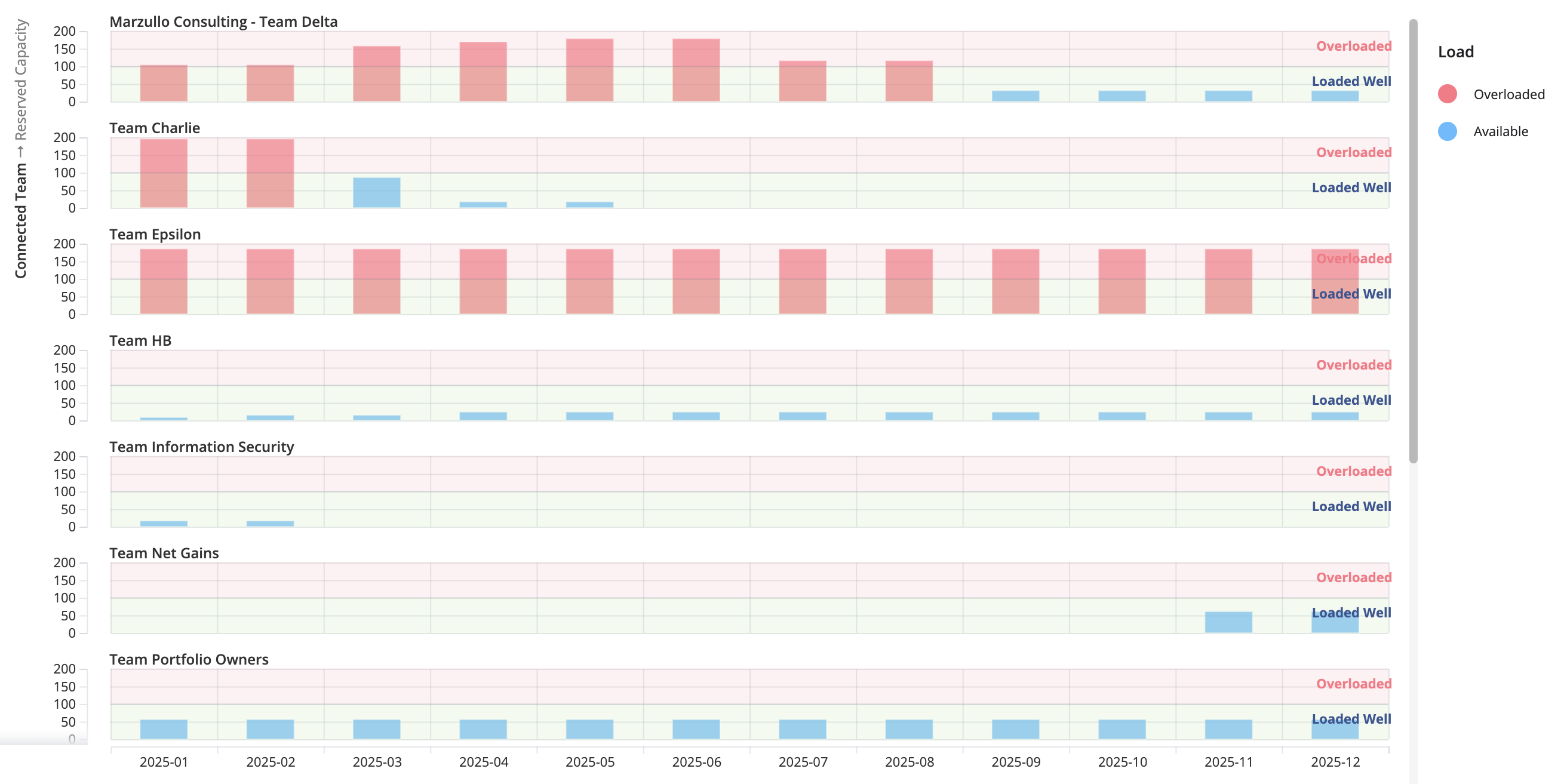
- Where will demand exceed capacity in the next 30/60/90 days—and which teams are at risk of overload?
- What’s the earliest we’ll hit constraints (key roles/dependencies), and what’s the mitigation plan?
- If we rebalance work, what’s the fastest way to protect delivery dates without adding headcount?


From Cost Transparency to Continuous Optimization with ITFM and SPM
Companies today are under pressure to prove not just where money is being spent, but what value it’s delivering to the business. In this episode, hosts of ITFM Insights and Amplify Agile team up to explore how connecting IT Financial Management and Strategic Portfolio Management helps leaders make faster, smarter, more outcome-driven decisions.
