


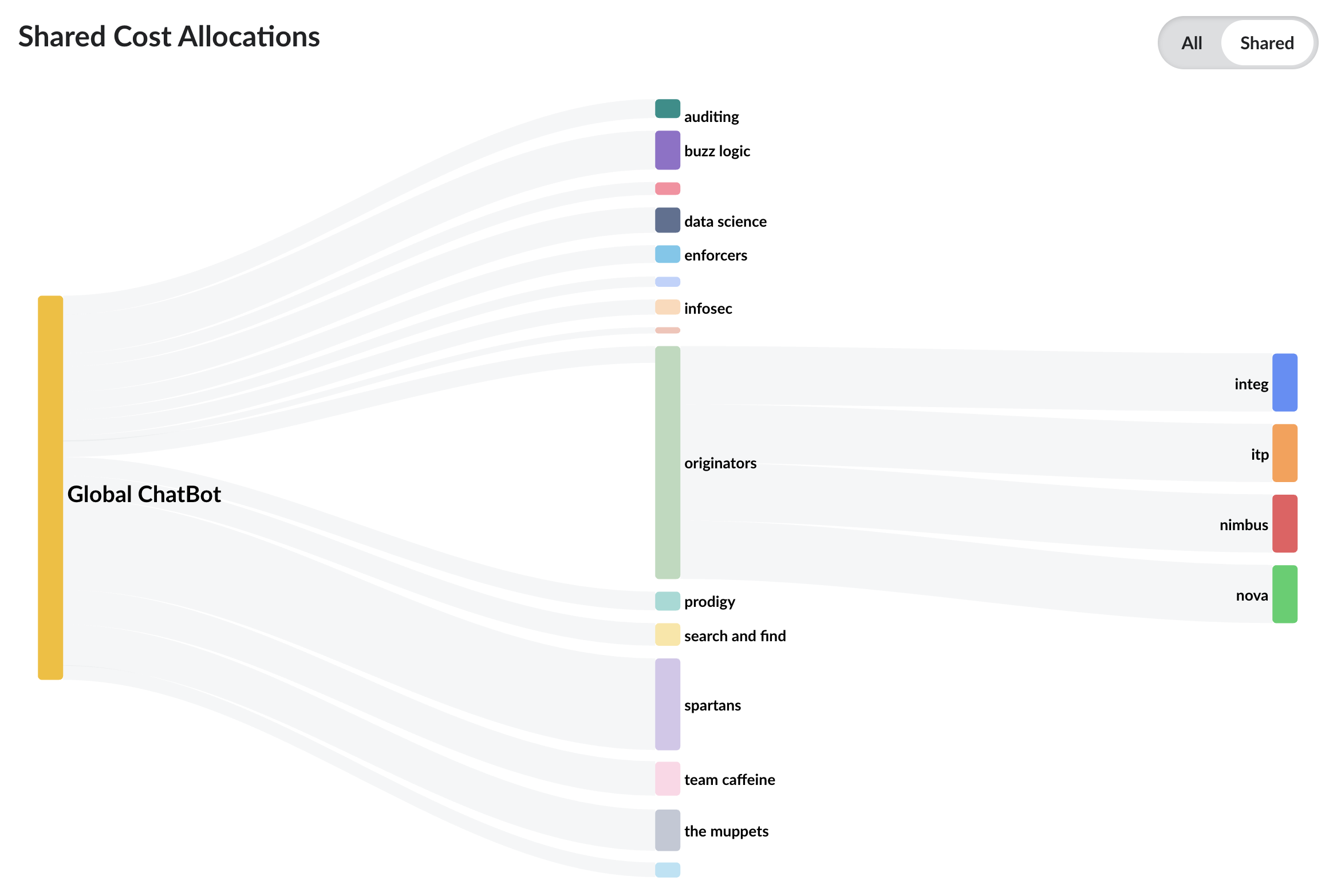


- Categorization
- Trends
- Efficiency
Categorization

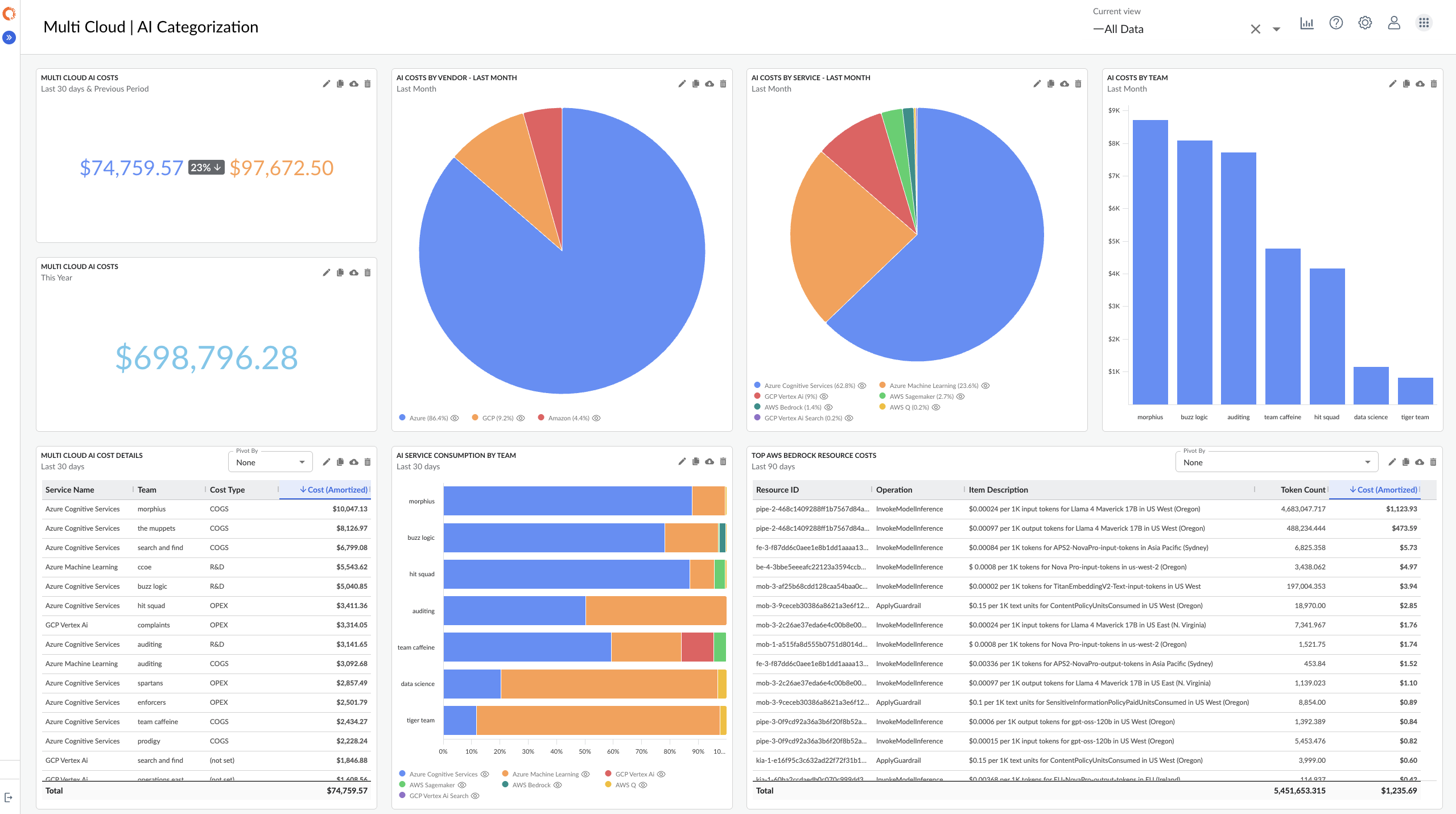
Trends
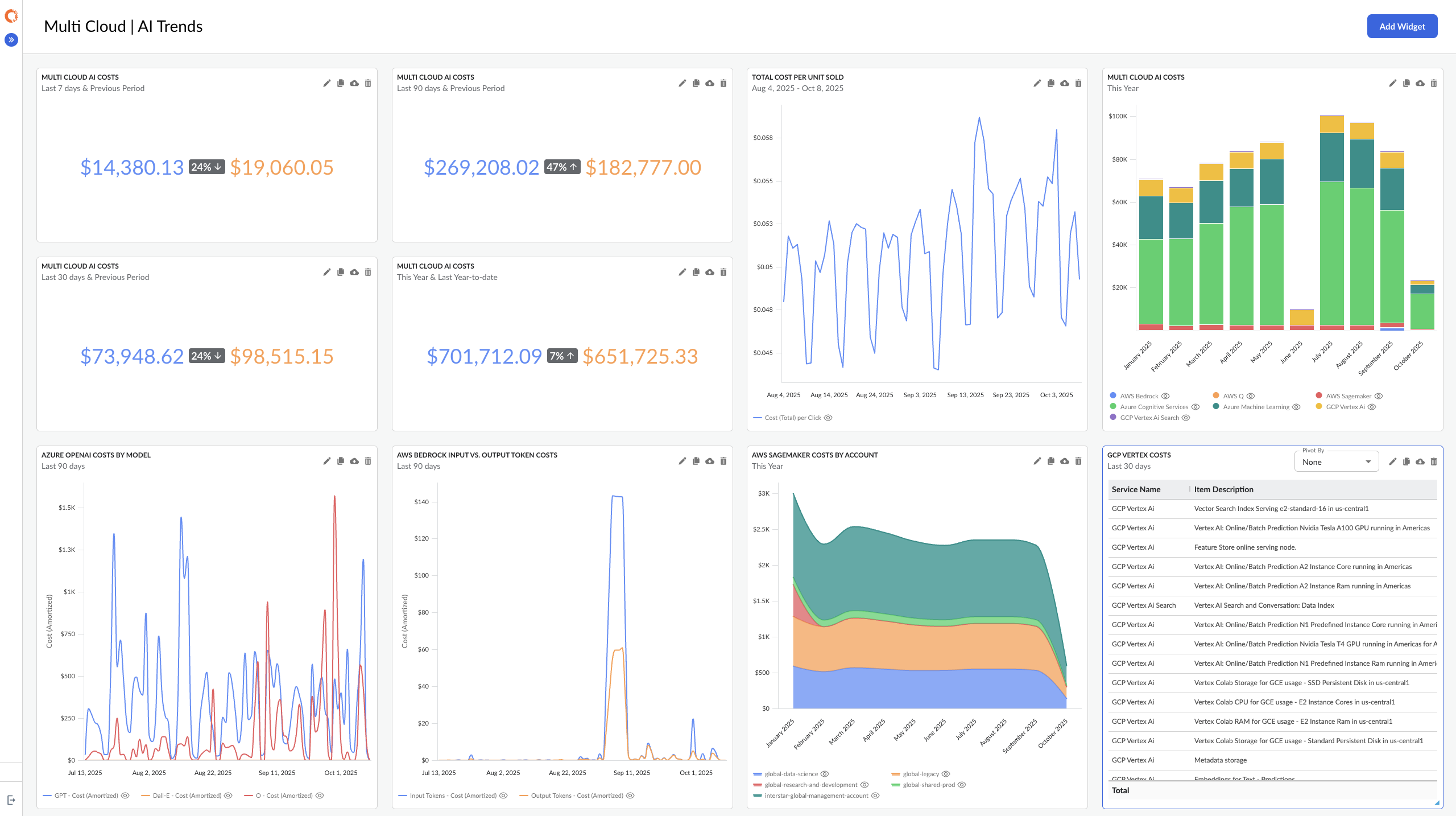
Efficiency


Best Practice Frameworks
Track, analyze, and optimize your cloud spend.
Financial Intelligence turns islands of data into insights with AI-Powered Apptio and AI Investment Management
Customer Success
Connect
Analyst Report
The Forrester Wave™: IT Financial Management Software, Q2 2026Analyst Report
2025 Gartner® Magic Quadrant™ for Cloud Financial Management ToolsJoin the more than 1,000 Apptians across the globe. Regardless of your specialty or location, we’ve got an opportunity for you.
![ApptioCareers-Employee[1]](data:image/svg+xml;base64,PHN2ZyB4bWxucz0iaHR0cDovL3d3dy53My5vcmcvMjAwMC9zdmciIHZpZXdCb3g9IjAgMCAyMjUgMjc1IiB3aWR0aD0iMjI1IiBoZWlnaHQ9IjI3NSIgZGF0YS11PSJodHRwcyUzQSUyRiUyRnd3dy5hcHB0aW8uY29tJTJGd3AtY29udGVudCUyRnVwbG9hZHMlMkZlbGVtZW50b3IlMkZ0aHVtYnMlMkZBcHB0aW9DYXJlZXJzLUVtcGxveWVlMS1xZzVuenB5MHdoaWJtbzZvdmJqNGM3MHh0aTUzdmo1OHM0endwajh0dHMucG5nIiBkYXRhLXc9IjIyNSIgZGF0YS1oPSIyNzUiIGRhdGEtYmlwPSIiPjwvc3ZnPg== "ApptioCareers-Employee[1]")
A Four-Step Framework to Manage Your Generative AI Investments
As AI adoption accelerates, FinOps teams are facing new challenges in managing cloud and SaaS spend. Whether your organization is using cloud managed services or building custom infrastructure, AI can introduce unpredictable costs, complex billing, and pressure to prove ROI.
AI workloads often spike unexpectedly—especially for inference—making forecasting difficult. They typically run on expensive, GPU-backed infrastructure that is frequently overprovisioned, leading to wasted spend. Billing models vary widely across providers and deployment types, with charges often bundled into single-line items, making it hard to allocate costs accurately across teams or projects. On top of that, finance leaders need clear visibility into the business value of AI investments to justify ongoing spend.
FinOps practitioners are uniquely positioned to bring accountability, transparency, and efficiency to AI initiatives—ensuring innovation doesn’t come at the cost of financial control.
reduction in cloud unit costs
allocation of multi-cloud program costs
commitment coverage
Generative AI is reshaping digital experiences—and creating new, unpredictable cost patterns. Watch this webinar to learn how FinOps and engineering teams can bring financial discipline to AI investments despite token pricing, rapid model changes, and GPU‑driven infrastructure.
AI costs can be unpredictable and complex, but your cloud financial management doesn’t have to be. IBM Cloudability delivers the transparency, recommendations, and insights FinOps teams need to unlock lasting business value from AI.
AI costs can be unpredictable and complex, but your cloud financial management doesn’t have to be. IBM Cloudability delivers the transparency, recommendations, and insights FinOps teams need to unlock lasting business value from AI.
Generative AI workloads are reshaping whole industries—but they’re also some of the most expensive and unpredictable to run in the cloud. As organizations race to integrate GenAI into their products and pipelines, FinOps becomes essential for keeping innovation sustainable. In this session you will learn how to demystify workloads, apply FinOps principles to manage challenges, and use unit cost metrics to measure and improve cost efficiency.
IBM Cloudability helps you decode spend across teams, workloads, and infrastructure. From categorization to trends to efficiency, get the insights you need to optimize investments, improve unit economics, and drive smarter decisions at scale. According to the FinOps Foundation, 97% of respondents to the State of FinOps survey are investing in multiple infrastructure areas for AI. But less than 30% of AI leaders report that their CEOs are happy with AI investment return, according to a Gartner report.
What teams spent the most on AI infrastructure last month?
Which portion of AI costs belong to R&D and can be capitalized versus being COGS or OpEx?
What models, services, and infrastructure components are most costly?
Are sudden spikes in AI spend occurring, and what workloads are driving them?
Which services or models are showing the fastest cost growth month over month?
Are AI costs improving or hurting my overall unit economics?
Which AI workloads have the highest idle spend?
Where are GPU, CPU, or memory resources consistently underutilized?
Which teams or applications are achieving the best cost efficiency?
AI spending is projected to hit $644B by the end of 2025. Without proper cost management, budgets can spiral before value materializes. Discover how FinOps principles help align GenAI costs to actual business outcomes across GenAI lifecycle phases.
AI workloads introduce complex billing models and monolithic charges, making it hard for organizations to allocate costs accurately and enforce accountability across teams. FinOps practitioners require sophisticated allocation tooling to reliably charge costs back and focused dashboards to scale cost awareness.
Engineers often run AI workloads on overprovisioned GPU-backed infrastructure without understanding the cost implications, leading to wasted spend. They need integrated cost visibility and optimization insights to guide efficient infrastructure choices and balance performance with budget constraints.
Senior leaders face ROI transparency gaps and struggle to justify escalating AI investments due to unpredictable spend patterns and limited visibility into value creation. They need clear value metrics, benchmarking tools, and up-to-date insights to evaluate AI performance, scalability, and business impact.
Fluctuating AI usage combined with diverse billing data makes forecasting unreliable and budgeting difficult. Teams managing financial planning need predictive analytics that factors in both historical usage patterns and future plans, with tighter cross-functional alignment to help improve plan accuracy.